


Overview
Our beautiful planet has millions of amazing ecosystems, all of which have their own unique tone and feel. When most people think of oceanic environments, usually what comes to mind are tropical environments. Very rarely does anyone think of New England, let alone Rhode Island, the smallest state in the U.S.
Rhode Island, however, packs a punch. Some of its environments are among the last of their kind in New England, and if one does enough research, it is not hard to see why the Nature Conservancy lists Block Island in particular as one of 12 “Last Great Places” in the western hemisphere.
The island also lies along the Atlantic Flyway, one of North America’s major migratory bird routes, serving as a seasonal haven for hundreds of bird species. Rhode Island’s marine ecosystems are further influenced by the confluence of cold northern and warm southern Atlantic currents, creating a unique biodiversity corridor teeming with life—from seagrass meadows to pelagic giants.
This series is meant to showcase one of our planet’s unsung environments, an area that is right under the nose for those that habitat the Ocean State.

Content

The shoreline.
The film begins on Rhode Island’s iconic shoreline, introducing many of the different types of habitats the the Ocean State hosts. Rhode Island’s coastline is incredibly diverse, encompassing barrier beaches, tidal marshes, rocky headlands, and cobble shores with many different species of shorebirds nesting and feeding on the wracklines.

Seagrass environments.
Moving just beyond the sand lies a lesser-known, yet ecologically vital realm: Rhode Island’s eelgrass beds. These underwater meadows once blanketed coastal shallows but have declined significantly due to nutrient runoff, sedimentation, and warming waters. Rhode Island has several meadows that remain healthy despite the changing climate.

Innovative shark tagging.
Explore ASI’s use of advanced satellite and acoustic tagging methods to monitor shark species such as great whites, makos, and blue sharks. Highlight the institute’s milestone of tagging its 30th great white shark in Rhode Island waters, providing invaluable data on migration patterns and behavior.
Oceanic migrations.
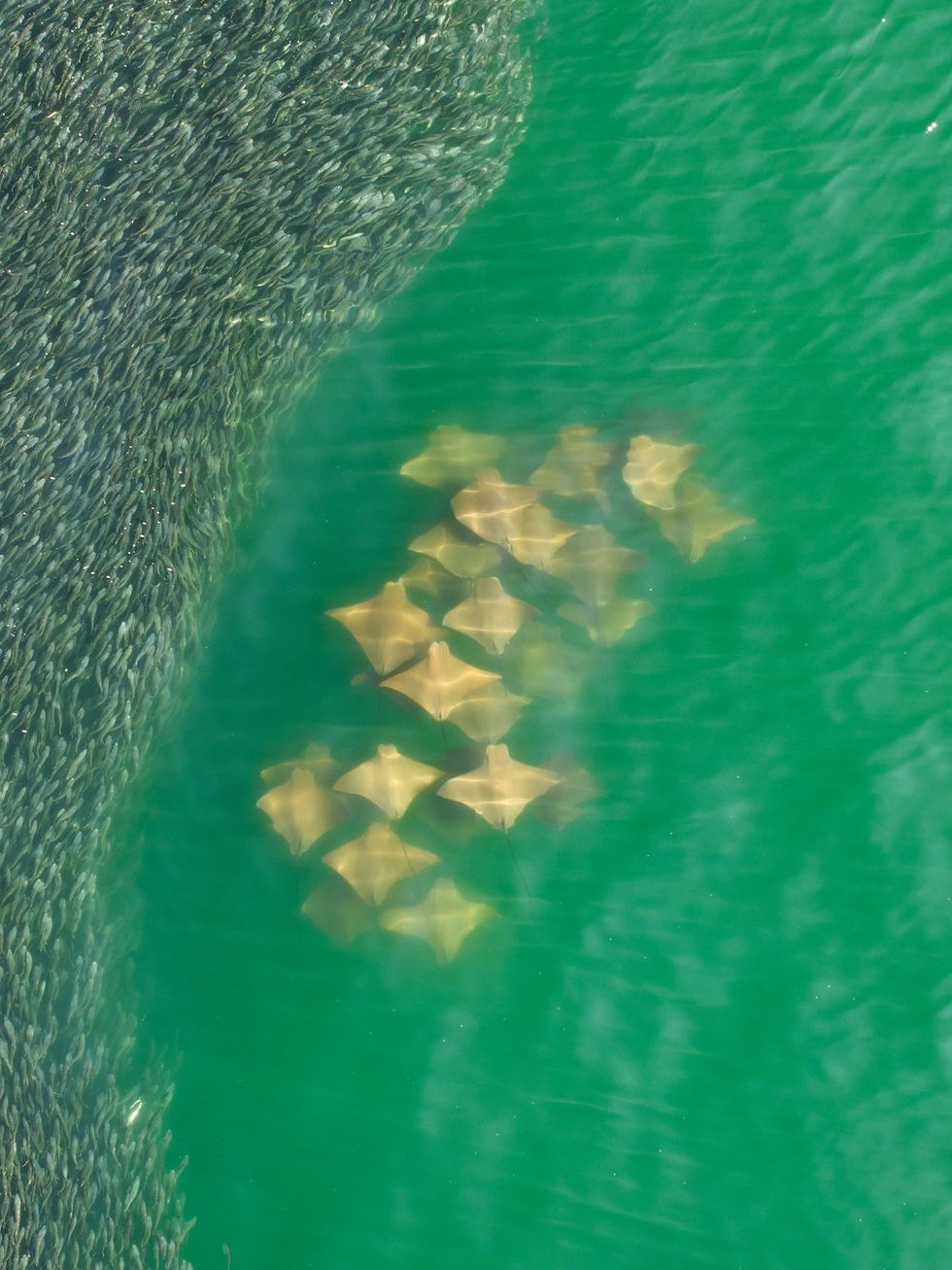
Explore and examine ocean migration off of New England and how Rhode Island fits into how different species move along the Eastern Seaboard. Will explore different species of marine life as they migrate up and down the eastern seaboard as well as pelagic environments.

Impact and Goals
The documentary closes by uniting the stories of shoreline birds, underwater meadows, whales, and sharks—all bound by a single truth: healthy shorelines and marine systems are vital for the survival of species and people alike. In Rhode Island, the interface between land and sea is more than a postcard view—it’s a living, breathing system in need of recognition and protection. This film seeks to inspire audiences to act—to conserve, support science, and value the Ocean State as a critical ecological stronghold on the edge of a continent.

A rallying cry.
Rallying local communities to get more involved in conservation and help preserve the environments around them.
Environmental EDU.
Educate viewers on how seemingly harmless acts (such as putting fertilizers in gardens) can be harmful to oceanic habitats (fertilizers creating blooms which can kill seagrass meadows).
Captivating imagery.
Showcase the biodiverse and under represented Rhode Island shoreline and oceanic habitats and environments, building an appreciation among those who might not be aware of what’s in their own backyard.
Inspiration.
Inspire those with the means to financially support environmental organizations and nonprofits that work to protect our planet and natural resources.

We aim to produce a love letter to the Ocean State, showcasing its powerful conservation stories, environments, and wildlife.
Tomas Koeck
Lead Producer | Silent Flight Studios

Special Focus
This documentary series will explore some of the region's most interesting environmental focused NGO's, community based organizations, and scientific institutes. The individuals that make up these organizations fight every day for the survival of the natural world, including the Rhode Island's coastline and beyond.
Conservation Partners


